

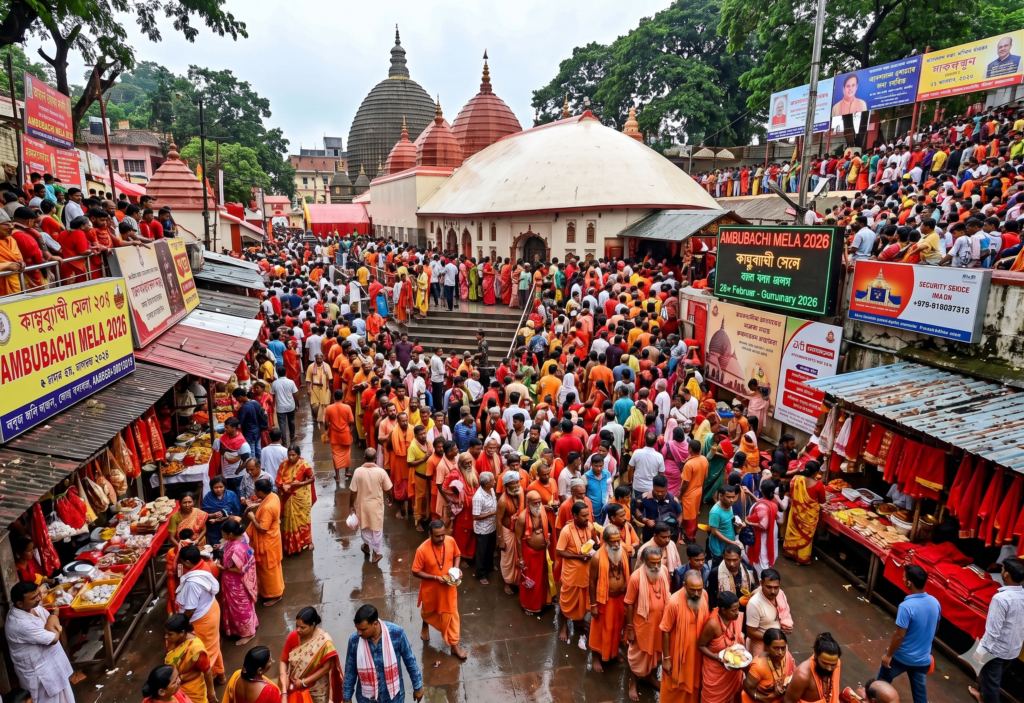
Ambubachi Mela: The Divine Celebration of Creation and Feminine Energy
Ambubachi Mela is one of the most revered spiritual festivals in India, celebrated every year at the sacred Kamakhya Temple in Assam. This unique festival honors the divine feminine power of Maa Kamakhya and symbolizes fertility, creation, and the life-giving force of nature.
Unlike many religious festivals that celebrate victories or historical events, Ambubachi Mela is dedicated to the natural cycle of womanhood. It marks the annual menstruation period of Goddess Kamakhya, making it a powerful spiritual event that attracts millions of devotees, saints, tantric practitioners, and pilgrims from around the world.
The festival is a beautiful reminder of the importance of feminine energy in creation and the deep spiritual wisdom embedded in Hindu traditions.
What is Ambubachi Mela?
Ambubachi Mela is an annual religious gathering held at the famous Kamakhya Temple, located on the Nilachal Hills of Guwahati, Assam. The festival generally takes place during the monsoon season in June.
According to ancient beliefs, Goddess Kamakhya undergoes her yearly menstrual cycle during this period. As a mark of respect, the temple remains closed for three days. No regular worship or darshan takes place during this time.
After three days, special purification rituals are performed, and the temple doors reopen for devotees. Thousands of pilgrims eagerly wait for this auspicious moment to seek the blessings of Maa Kamakhya.
The Sacred Importance of Kamakhya Temple
Kamakhya Temple is one of the most important Shakti Peethas in India. According to Hindu mythology, it is believed that the sacred yoni (womb) of Goddess Sati fell at this location when Lord Vishnu dismembered her body to calm Lord Shiva’s grief.
Because of this divine connection, Kamakhya Temple is regarded as a symbol of fertility, creation, motherhood, and feminine power.
The temple is also one of the most significant centers of Tantra Sadhana and Shakti worship. Devotees believe that prayers offered here are highly effective in fulfilling wishes and removing obstacles.
History of Ambubachi Mela
The tradition of Ambubachi Mela has been observed for centuries. Ancient scriptures and local legends describe the festival as a celebration of Earth’s fertility and the divine feminine principle.
The word “Ambubachi” is derived from two Sanskrit words:
- “Ambu” meaning water
- “Bachi” meaning flowing
The festival coincides with the onset of the monsoon season, which nourishes the earth and supports agricultural growth. Therefore, Ambubachi Mela is also associated with prosperity, abundance, and new beginnings.
Farmers in many parts of Eastern India consider this period sacred and often refrain from agricultural activities until the completion of the festival.
Rituals Observed During Ambubachi Mela
Temple Closure
The Kamakhya Temple remains closed for three days, signifying the menstruation period of the Goddess. During this time, devotees meditate, chant mantras, and engage in spiritual practices.
Tantric Worship
Ambubachi Mela is famous for attracting tantric practitioners from across India. Many spiritual seekers perform special rituals and sadhanas during this highly charged spiritual period.
Purification Ceremony
On the fourth day, priests conduct sacred purification rituals before reopening the temple to the public.
Distribution of Holy Prasad
Devotees receive sacred offerings believed to carry the blessings of Maa Kamakhya. These offerings are considered extremely auspicious and are preserved by many devotees as symbols of divine protection.
Spiritual Benefits of Ambubachi Mela
Divine Blessings
Devotees seek the grace of Maa Kamakhya for happiness, prosperity, and spiritual progress.
Fertility and Child Blessings
Couples often pray to the Goddess for fertility, healthy children, and family well-being.
Love and Marriage Success
Many devotees participate in special prayers for finding a suitable life partner, resolving relationship issues, and achieving marital harmony.
Protection from Negative Energies
The divine energy of Maa Kamakhya is believed to remove obstacles, negativity, and harmful influences from life.
Career and Business Growth
Entrepreneurs, professionals, and business owners seek blessings for financial stability, success, and growth.
Spiritual Awakening
The powerful atmosphere of Ambubachi Mela inspires self-discovery, meditation, and inner transformation.
Why Millions Visit Ambubachi Mela Every Year
Ambubachi Mela is not merely a religious event; it is a spiritual experience. Pilgrims from every corner of India gather to witness the divine energy of Maa Kamakhya.
The festival offers:
- Spiritual purification
- Divine blessings
- Sacred rituals
- Connection with ancient traditions
- Opportunities for meditation and prayer
- A deeper understanding of feminine power
The atmosphere around the temple becomes vibrant with devotion, faith, and spiritual enthusiasm.
Participate in Ambubachi Puja Online
Today, devotees who cannot travel to Kamakhya Temple can participate in special Ambubachi Puja services online. Experienced priests perform rituals on behalf of devotees and offer prayers for their specific wishes and intentions.
Online participation allows devotees worldwide to receive the blessings of Maa Kamakhya from the comfort of their homes while remaining spiritually connected to this sacred festival.
Conclusion
Ambubachi Mela is a remarkable celebration of life, fertility, creation, and divine feminine energy. Rooted in centuries-old traditions, the festival continues to inspire millions of devotees with its profound spiritual significance.
The sacred blessings of Maa Kamakhya help devotees overcome obstacles, achieve success, find happiness, and progress on their spiritual journey. Whether you visit the holy Kamakhya Temple in Assam or participate through online puja services, Ambubachi Mela offers a unique opportunity to connect with the divine power of the Mother Goddess.
May Maa Kamakhya bless you with prosperity, protection, spiritual growth, and fulfillment of all your sincere desires.
Jai Maa Kamakhya!